
Victorian Landcare Magazine - Spring 2025, Issue 90

For more than 40 years, the Deveson family has run Moondarra Blueberries, a certified organic farm in Gippsland, with sustainability front and centre. During the past decade, they’ve stepped up efforts to reduce their environmental impact and build long-term resilience.
From introducing beekeeping and solar energy to compostable packaging and low impact weed control, the family continues to innovate.
Landcare has played a significant role in that journey. In the farm’s early years, Mountain Rivers Landcare Group (MRLG) provided native tube stock to revegetate gullies and helped secure funding to fence and protect waterways – a partnership that helped shape the family’s land stewardship values and approach.
The Devesons initially began using beehives to improve blueberry pollination, but found it also boosted biodiversity, with native plants pollinated by the bees providing food and shelter for increasing numbers of native insects, such as native bees, butterflies, moths and hoverflies.
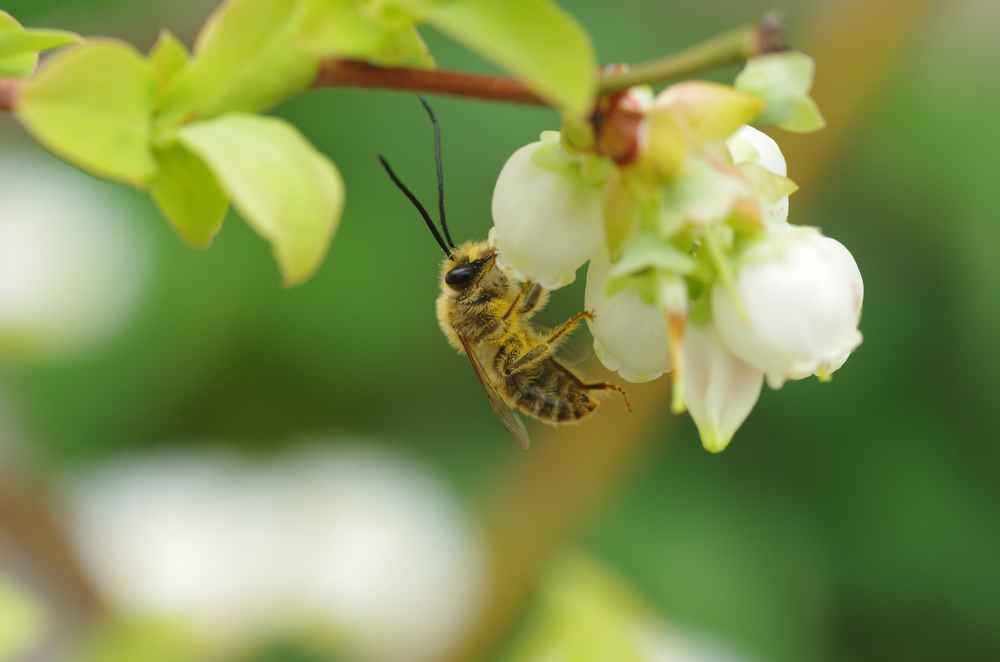
Above: A honeybee pollinates a blueberry flower in spring.
Farm manager Joel Deveson said introducing bees brought with it a steep learning curve.
“Initially, we underestimated how much management bees need,” he said.
“It’s not as simple as placing a hive and walking away.”
Maintaining healthy hives requires seasonal planning, pest control and providing chemical-free forage in shelter belts and flowering plants. The family also raises their own queen bees to breed stronger hives suited to Gippsland’s cooler climate.
At a recent Landcare field day, the community was given the chance to learn about the farm and Joel’s beekeeping practices firsthand.
MRLG secretary David Lowe said Joel’s father, Mal, a foundation member of MRLG, had a wealth of environmental knowledge.
“At our meetings, Mal is always offering fascinating insights into the local area, trees and sustainable farming, so when he suggested we visit his property to have a look at their pollination program, this was an obvious choice,” he said.
Caroline Hammond, Landcare Facilitator at Latrobe Catchment Landcare Network, whose role is funded by the Victorian Government’s Victorian Landcare Facilitator Program, is a fellow beekeeper and long-time customer of Moondarra Blueberries.
Caroline said it had been “a real pleasure” to see the Devesons share their know-how so generously.
“It’s always wonderful to see our Landcare groups sharing their knowledge and experience with others and this field day did not disappoint,” she said.
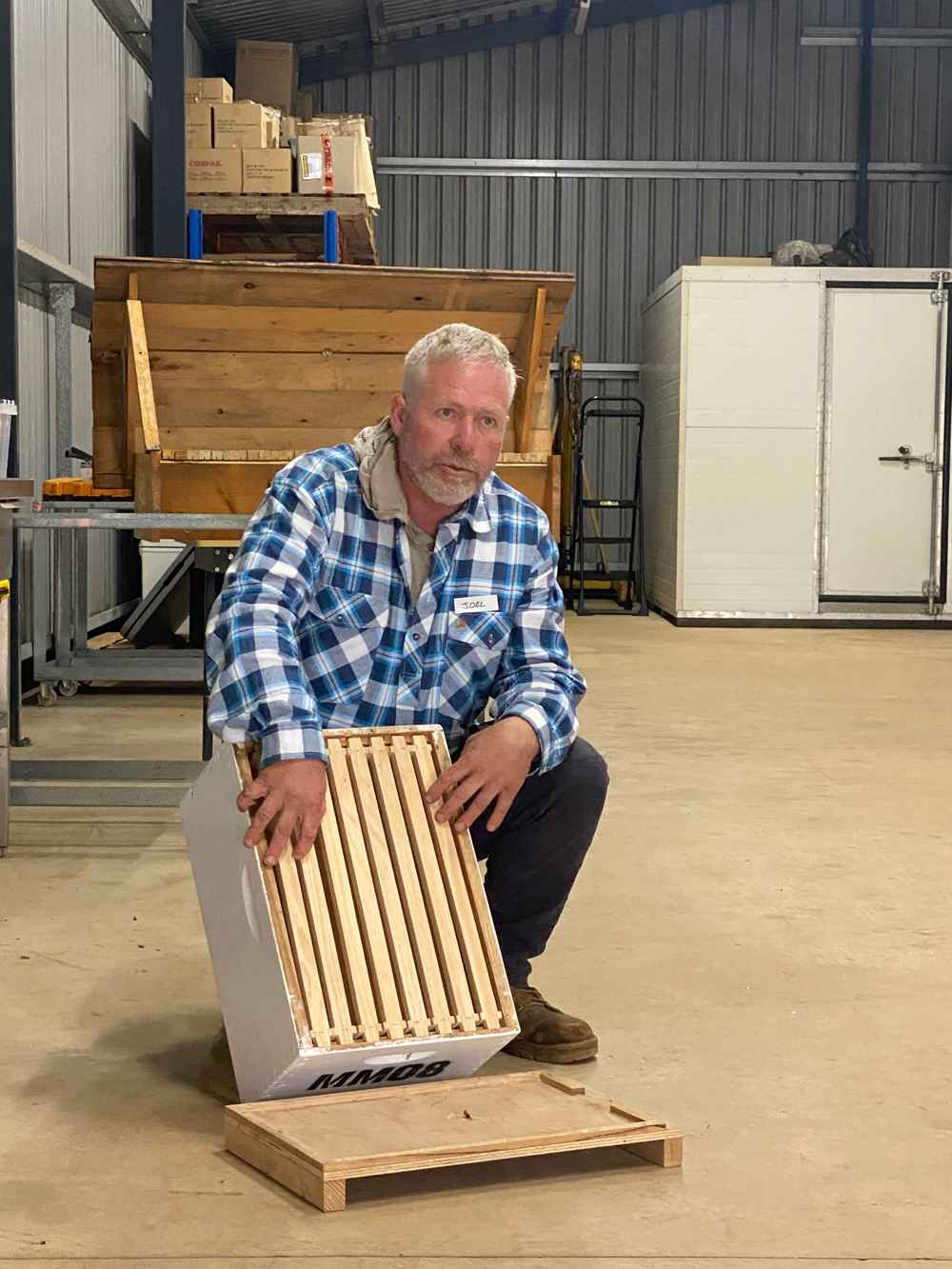
Above: Farm manager Joel Deveson shares his knowledge about blueberries and pollination during the field day.
Energy use was another area the family aimed to improve. With rising electricity prices for refrigeration and irrigation driving up the cost of production, they installed a solar and battery array – a major investment that has already paid dividends.
“We now generate the majority of our power onsite,” Mal said.
“Our battery system gives us backup capacity and greater control, especially during grid outages.”
Since it was commissioned in August 2023, the system has cut more than 58 tonnes of carbon dioxide emissions, demonstrating that even small farms can make a meaningful contribution to climate solutions.
The family has transitioned from a diesel ride-on mower to an electric model for cutting grass between rows, and is exploring the potential of autonomous electric tractors or mowers to better manage grass and weeds.
Government grants have helped fund energy-efficient upgrades to irrigation pumps and compressors, improving reliability and reducing costs.
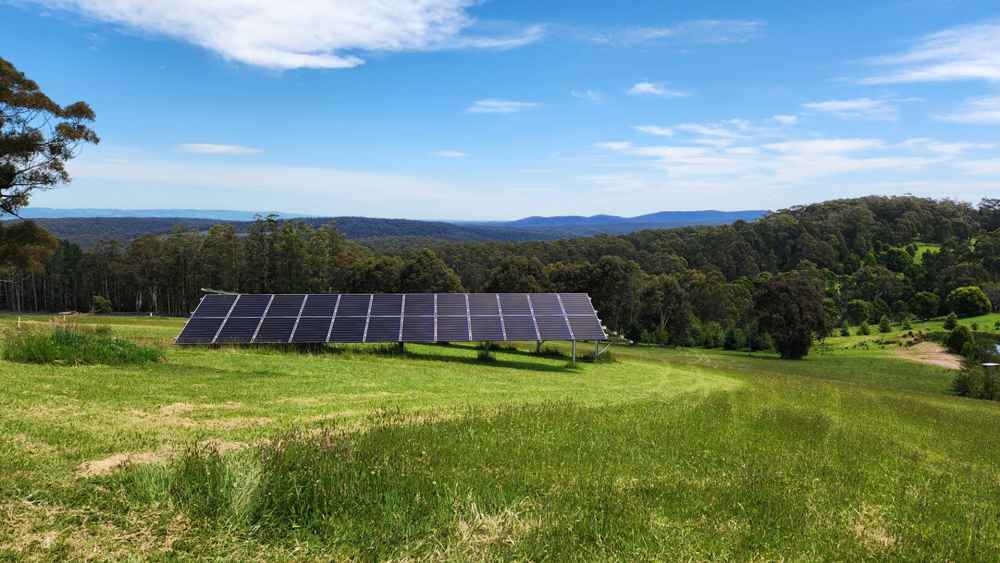
Above: Installing a solar and battery array has reduced the cost of electricity and cut carbon dioxide emissions, as well as giving the Devesons a more secure and reliable electricity supply.
As organic growers, using petroleum-based plastic fruit packaging never sat comfortably with the Devesons, but for years, alternatives remained out of reach for a small farm.
In 2019, they partnered with a New Zealand company to develop a fully home compostable punnet, sealed with a compostable cellulose film. It meets Australian Standard AS 5810-2010 and breaks down within 26 weeks without producing toxic residues.
Although the new packaging adds about 50 cents to the cost of each unit, wholesale partners and customers have backed the move.
Before the switch, the farm used almost two tonnes of plastic each season – a figure that starkly underscored the need for change.
By reducing plastic use, the family has not only aligned the packaging with their values but also significantly reduced their environmental footprint.
Managing weeds and pests has always been a challenge. Over the years, the family has trialled a range of solutions – including guinea pigs, ducks, guinea fowl and steam weeding in the blueberry paddocks, and goats elsewhere on the 65-hectare farm.
Guinea pigs proved too small to make a meaningful difference; guinea fowl and ducks showed great promise in controlling grasshoppers and snails, but were ultimately lost to foxes.
Boer cross goats have proven particularly effective on blackberries, woody weeds, invasive grasses and sloped terrain. Their browsing encourages natural groundcover to regenerate without compacting the soil, although careful fencing and rotational grazing are essential.
The family’s agroforestry efforts are also a core part of their land and weed management strategy. The on-farm plantation serves multiple purposes: supplying mulch for blueberry rows, producing timber for future farm use, and contributing to long-term land conservation.
Within the blueberry rows, a diesel and water-powered thermal weeder offers chemical-free weed control.
One of the biggest lessons for Moondarra Blueberries is that no single solution works in isolation. True sustainability requires a whole-of-farm approach; energy, biodiversity, soil health, packaging and waste are all interconnected.
Mistakes have offered valuable insights, and the family continues to learn by testing.
“Sustainability is a work in progress,” Joel said.
“There’s no finish line.”
By sharing both their successes and their setbacks, the Devesons hope to inspire others to continue pushing forward – one project, one idea and one innovation at a time.
Kate Prezioso is business manager of Moondarra Blueberries.
For more information, go to www.moonblue.com.au.