Victorian Landcare Magazine - Spring 2025, Issue 90
Rabbits aren’t just a pest for farmers. They have a destructive impact on the environment and biodiversity, destabilising soil, disrupting natural vegetation and competing with native animals for food and habitat. They’re also a nuisance in urban areas, damaging gardens, lawns and sports grounds.
But thanks to a major partnership established by Warrnambool Coastcare Landcare Network (WCLN) and the efforts of dozens of landowners, rabbit numbers – especially in the Illowa area – have been curtailed by a multi-part baiting program that took place earlier this year.
The co-ordinated baiting program, using both Pindone and calicivirus treated carrots, followed a series of workshops across the state’s southwest, between October 2024 and April 2025. Each focused on management of a specific pest species: blackberry, rabbits, gorse and foxes.
The workshops were conducted as part of Agriculture Victoria’s Partnerships Against Pests program – Developing Partnerships Against Pests project, which brought together 15 community-based organisations and government agencies to work collaboratively on an education program.
The aim of the program was to improve community knowledge of best-practice integrated pest management techniques, and emphasise the need for co-ordinated community action for long-lasting results.
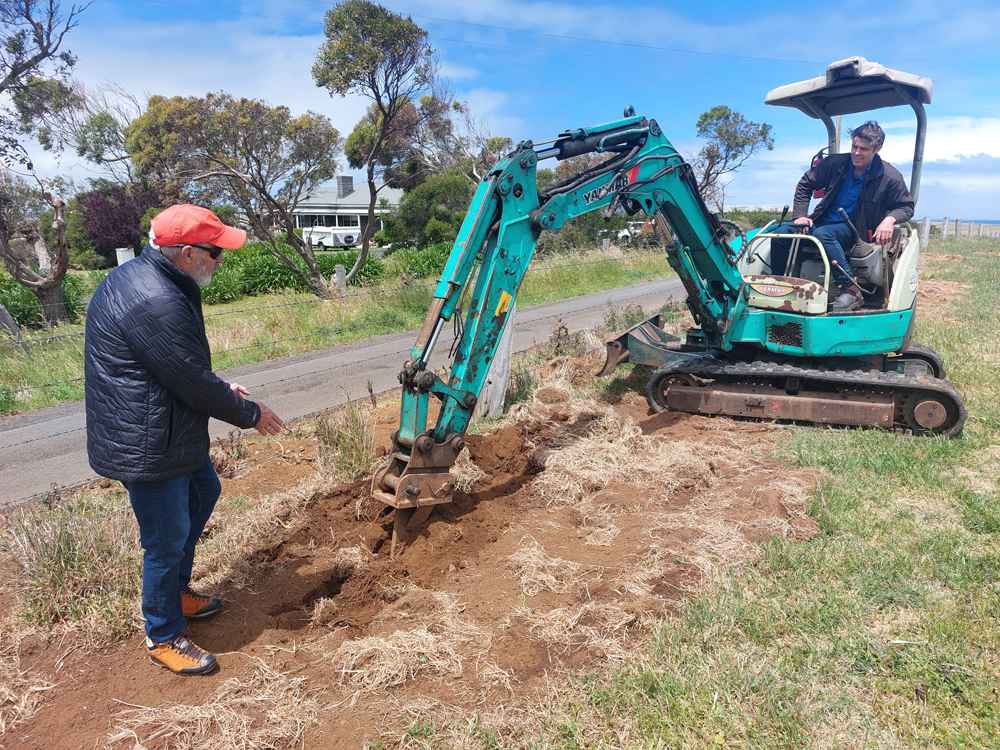
Above: Victorian Rabbit Action Network mentor Tim Bloomfield (from left) and Bligh Vegetation Management’s Tim Bligh demonstrate how to rip a rabbit warren.
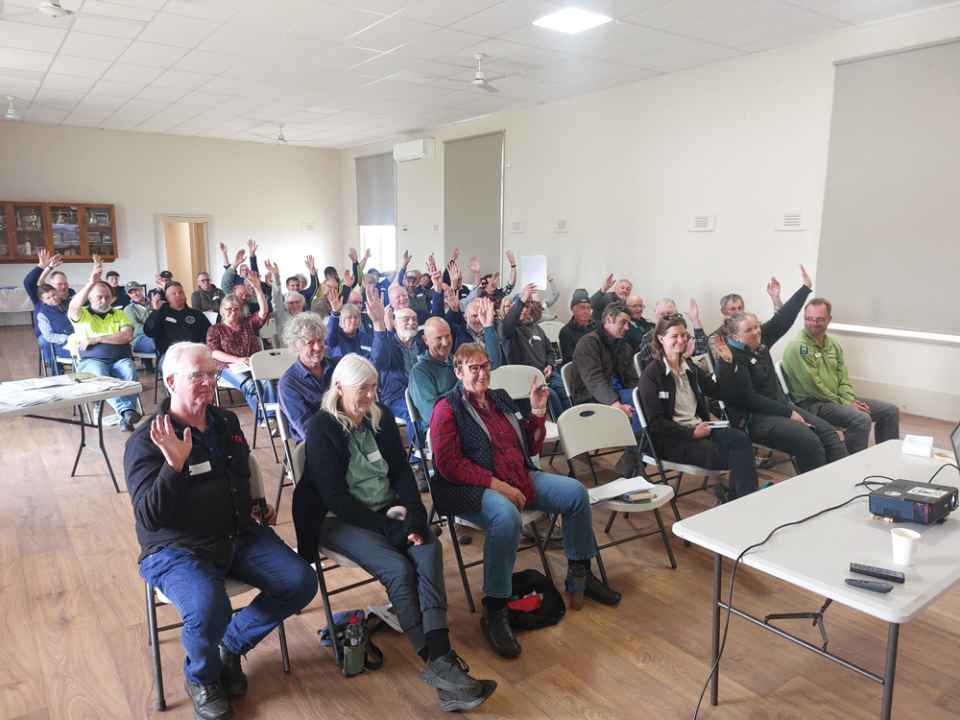
The workshops attracted 145 attendees, including landholders and managers, agency and NGO staff and pest control contractors, who heard from pest plant and animal experts, local agency representatives and local friends group volunteers.
In-field demonstrations, such as rabbit warren ripping, baiting and the mechanical control of blackberry and gorse infestations, provided an opportunity for attendees to learn tips and techniques from local service providers.
The most encouraging outcome of the program to date has stemmed from the rabbit control workshop held at Illowa, northwest of Warrnambool, in November.
In the weeks after the event, Illowa Rabbit Action Group members Ross Dawson and David Handscombe were contacted by numerous Illowa residents interested in controlling rabbits on their properties.
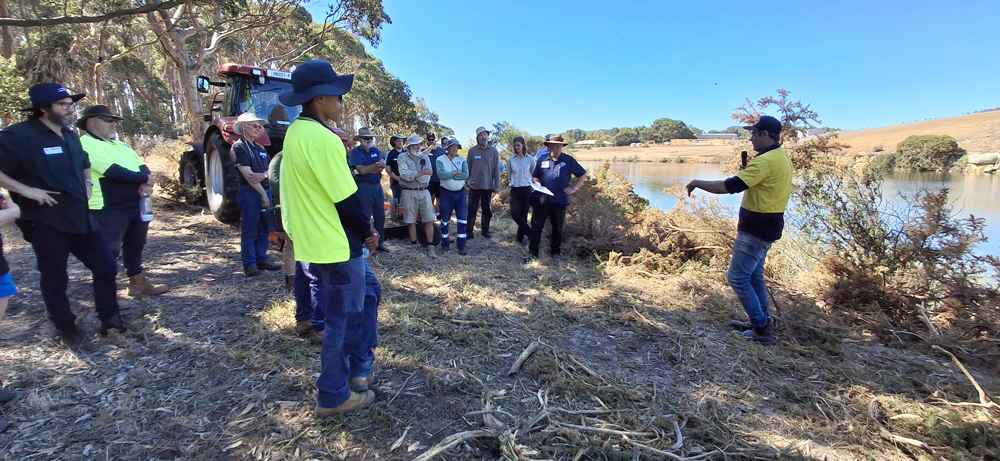
Above: Tim Bligh (right) explains mechanical methods of controlling gorse.
The action group had previously controlled rabbits at the local cemetery in 2018, but community involvement waned during the pandemic and rabbit populations in the area surged.
Thanks to the knowledge and commitment of Ross, David and local contractor, Rob Millard, 26 residents began a baiting program around Illowa in February.
They laid 940 kilograms of carrots treated with Pindone over three days. A second round of baiting involving an additional 43 properties and 210 kilograms of treated carrots took place in March.
This is a terrific example of what can be achieved at a community level, when knowledge of best practice and motivated community members come together. Much credit goes to Ross, David and the Illowa landholders for their dedication to controlling the rabbits together in their community.
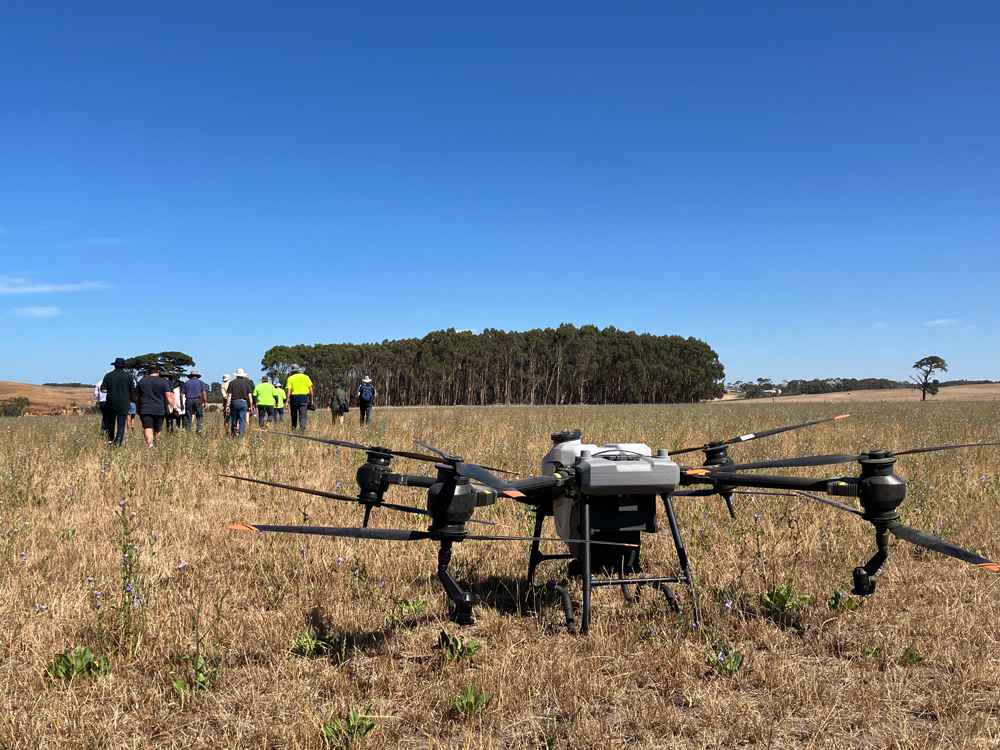
Above: Drones were used to map the location of gorse infestations.
Lessons for the project team which planned and ran the events included:
A pest control resource to provide ongoing access to best-practice pest control information and updates on local community control efforts will be housed at www.wcln.org.au.
WCLN received funding under the Partnerships Against Pests program from Agriculture Victoria.
Danielle Nipe is a Landcare Facilitator for Warrnambool Coastcare Landcare Network. Her position is funded by the Victorian Government Landcare Facilitator Program.
For more information email facilitator2@wcln.org.au.