
Victorian Landcare Magazine - Spring 2025, Issue 90
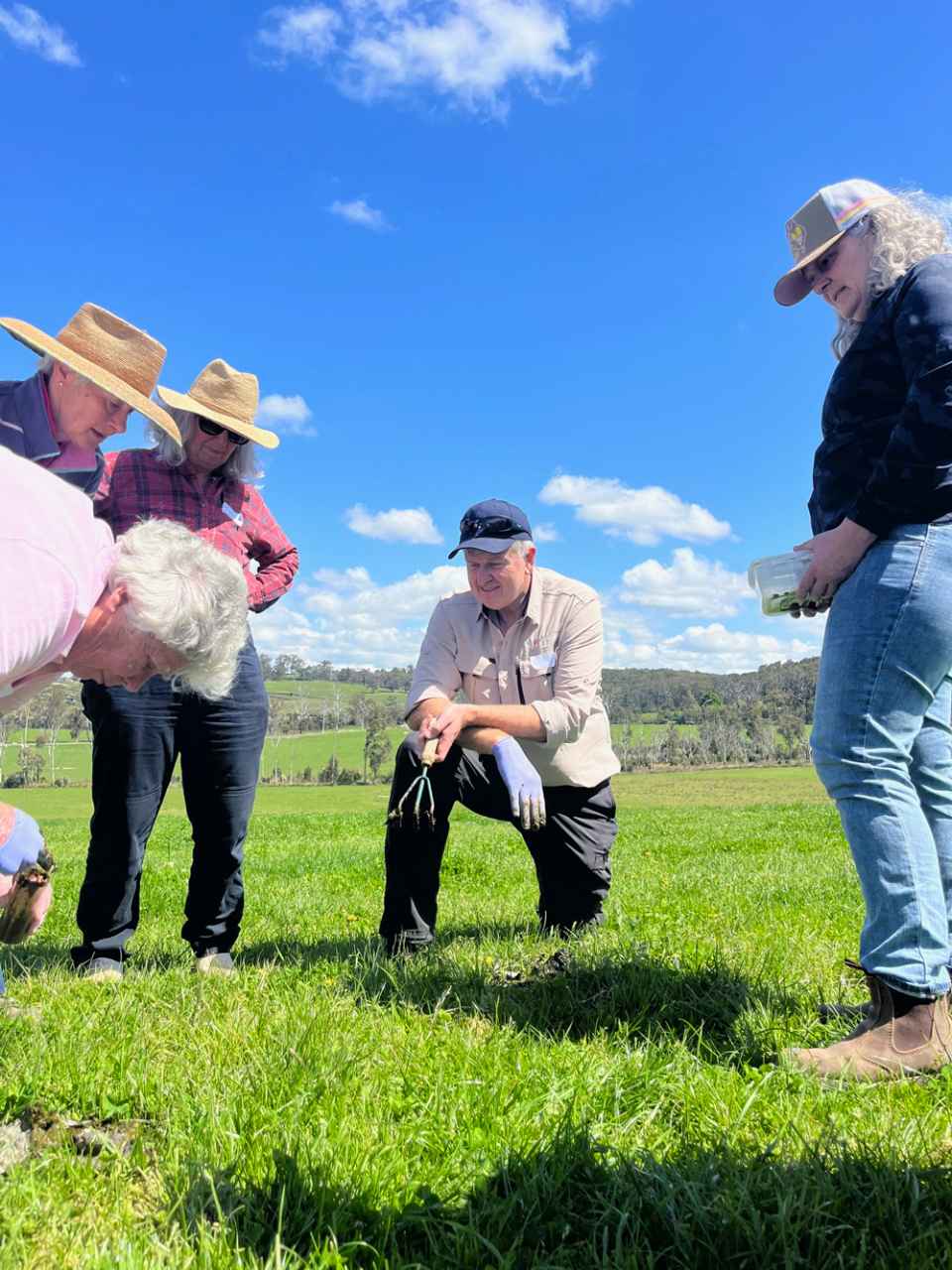
They’re among our smallest and most underrated workers, but the Dung Beetle Monitoring Project aims to lift the lid on the vital role these insects play in soil health.
Spanning the Port Phillip and Western Port catchments and involving multiple Landcare networks, the project is a collaborative effort to harness the power of dung beetles to bolster soil health, enhance water infiltration and reduce polluting runoff all year round.
Dung beetles are beneficial because they dig tunnels into the soil, removing animal manure from the surface to line their tunnels or store as balls to lay their eggs in. This sequesters nitrogen and phosphorus, making it available to plants and preventing it from washing into dams, waterways and marine environments.
They are also known to help fight parasites, prevent flies and biting midges from breeding, and can reduce the spread of disease.
What hasn’t been known is how many dung beetle species are present, their numbers and when they’re active.
These are questions that several projects have attempted to answer during the past decade by strategically introducing and monitoring dung beetle species.
The work began with Port Phillip and Westernport CMA (now part of Melbourne Water) Sustainable Agriculture Facilitator Karen Thomas and Cannibal Creek Landcare Group members managing dung beetle nursery beds and releasing beetles in 2015.
Then in 2020 the Yarra Valley Equestrian Landcare Group conducted a dung beetle monitoring project to raise awareness of their role in soil management and benefits for horse keeping.
Building on this foundation, South Gippsland, East Gippsland and Bass Coast Landcare networks expanded the project in 2022–23, with a focus on identifying active dung beetle species and their seasonal patterns.
Latrobe Catchment and Maffra and Districts Landcare networks joined the effort the following year, investigating the presence of dung beetles across paddocks in their regions.
The success of these initiatives paved the way for further expansion last year.
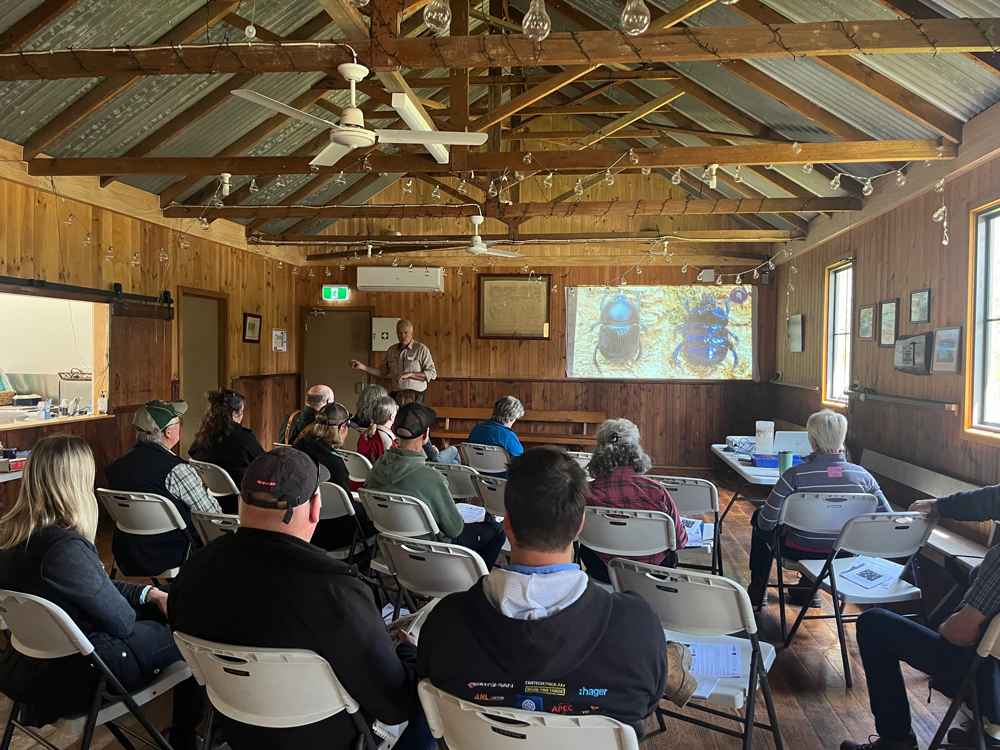
Above: Dung beetle researcher and breeder Dr Russ Barrow, of EcoInsects, shares his knowledge during a workshop at Tonimbuk Hall in October 2024.
The primary goal of the latest project is to train landholders to trap and monitor dung beetles on their properties over a 12-month period.
Training includes workshops led by expert Dr Russ Barrow, of EcoInsects, who provides insights into dung beetle ecology.
Participants receive identification booklets, information about monitoring and equipment options, and mentoring by Cannibal Creek Landcare Group member and dung beetle enthusiast Greg Collins. A WhatsApp discussion group facilitates real-time project updates and provides help with identification.
Greg said his fascination with dung beetles stemmed from learning “in the 1960s or 70s” about the CSIRO’s importation of dung beetles.
After hearing a lecture by South Australian soil health and dung beetle expert Dr Bernard Doube in 2013, he began identifying dung beetles on his hobby farm at Tynong North, in west Gippsland.
Greg attended numerous workshops and became involved in projects to identify, breed and introduce dung beetles to landholders in the area.
“The fact that they can change the environment in the manure to get rid of flies and cattle parasites; that’s the thing that drew me to it,” he said.
“But there’s also benefits for the farm that I’m on, in removing manure and taking water down into the soil. One of the main problems is people use cattle or horse drenches, and that could kill all the dung beetles on their property.”
Greg bred his first batch of Geotrupes spiniger dung beetles – also known as the blue bomber for its colourful underside – in 2021, and has watched the population gradually grow and spread.
As well as G spiniger, he said common introduced species in the area include Onthophagus taurus, Bubas bison and Aphodius fimetarius, while native species such as O granulatus and O australis are also found.
By establishing numerous monitoring sites, the project aims to map the distribution of dung beetle species and identify those that need encouragement through breeding, purchasing or swapping.
Despite the project’s promising start, several challenges have emerged. One significant hurdle is the variability in dung beetle activity due to weather conditions. For instance, a dry period in March led to reduced beetle activity, resulting in zero records across the board instead of anticipated low counts.
Another difficulty is ensuring monitoring data remains consistent. Variations in methodology, timing and environmental factors can lead to discrepancies in results. To address this, the project emphasises standardised training and provides mentoring and support with identification through WhatsApp chat.
The project has achieved notable successes despite these challenges. Releases are strategically planned to enhance the ecological balance and promote sustainable farming practices.
In May, 1600 dung beetles were successfully released at multiple sites across the project area, including Cape Schanck, Dromana, Garfield, Tynong North, Balnarring and the Yarra Valley.
The collaborative nature of the project has also fostered a sense of community among landholders. Through shared resources, knowledge exchange and collective action, participants have developed a deeper understanding of their paddocks and the role of dung beetles in soil health.
The establishment of a monitoring database, managed by Western Port Landcare Sustainable Farming Discussion Group facilitator Peter Ronalds, ensures data is systematically collected and analysed, providing valuable insights for future initiatives.
As the project progresses into its next phase, the focus will shift towards scaling up efforts and refining methodologies.
Karen and Greg will continue leading demonstration days to give landholders hands-on experience in identifying and releasing dung beetles.
By engaging more landholders and incorporating extra monitoring sites, we will expand the project’s reach. And by broadening the scope, we aim to create a comprehensive map of dung beetle distribution across the region that will inform future conservation and land management strategies.
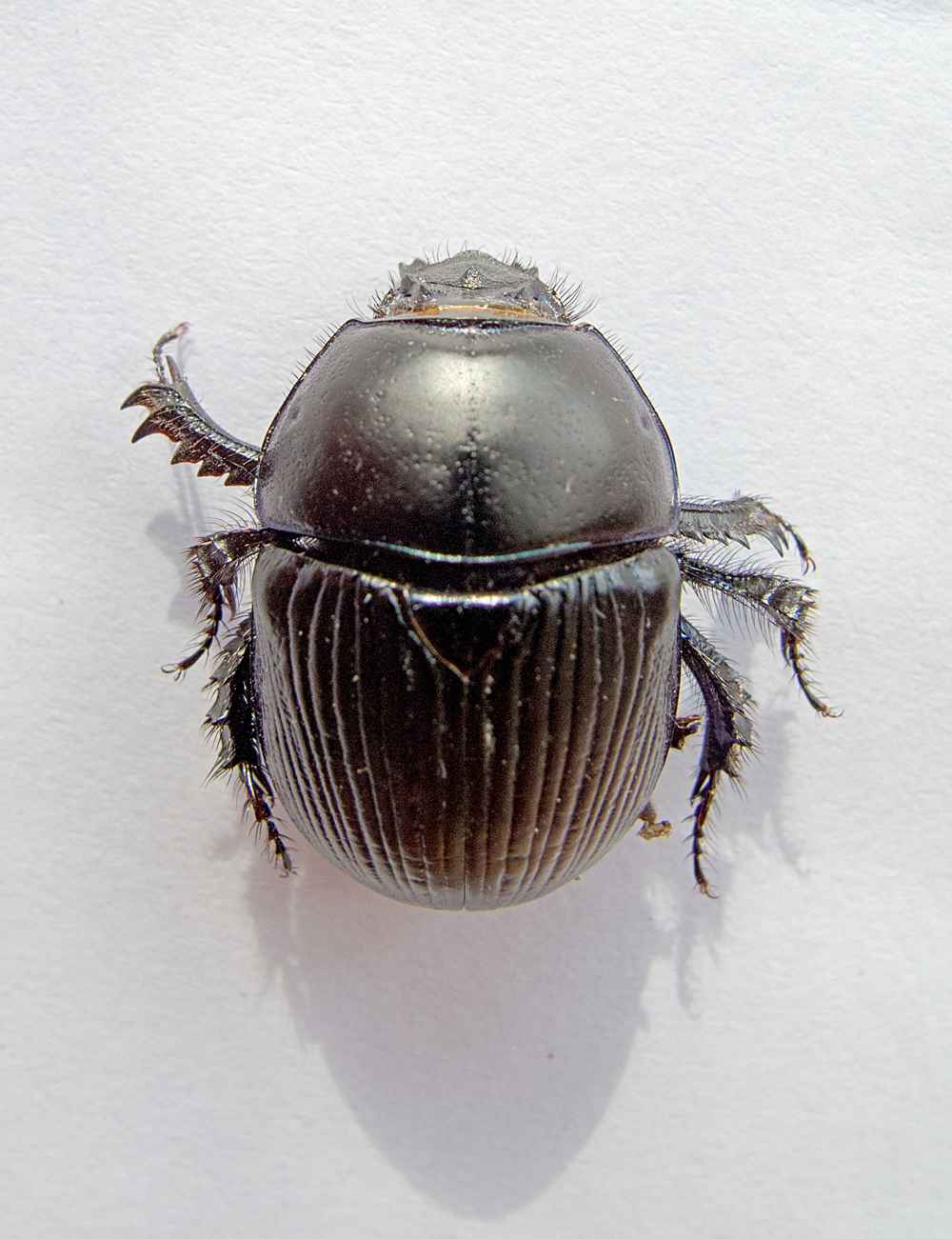
Above: Geotrupes spiniger dung beetles – also known as the blue bomber for its colourful underside – have been introduced to Victoria, Tasmania and parts of NSW.
More than Manure is supported by Melbourne Water through funding from a 2024 Victorian Government Landcare Grant in partnership with Western Port Catchment Landcare Network, Mornington Peninsula Equine and Yarra Valley Equestrian Landcare Groups.
Sue Finley is Landcare Facilitator, for Western Port Catchment Landcare Network. Her position is funded by funded by the Victorian Government Landcare Facilitator Program.
For more information email facilitator@wpcln.org.au.