Victorian Landcare Magazine - Spring 2025, Issue 90

Australia’s temperate woodlands are among the nation’s most threatened ecosystems. Once widespread, these biodiverse landscapes have been heavily impacted by land clearing, habitat degradation and fragmentation. Today, more than 80 per cent of Australia’s temperate woodlands have been cleared.
This has had a disastrous impact on woodland bird populations. About 195 Australian bird species depend on temperate woodlands, and 51 of these are now listed as threatened or in significant decline under the Temperate Woodland Bird Conservation Action Plan.
With 75 per cent of the remaining woodlands occurring on private property, it is essential that land managers and conservationists work together to create healthy, productive agricultural landscapes that protect our valuable woodland habitat.
BirdLife Australia’s Birds on Farms program works with landholders across the country to increase the extent, condition and connectivity of woodland habitat on private properties. The two Victorian projects form the largest component, with a statewide monitoring program and a dedicated habitat restoration project in the Yarra to Yea region, north of Melbourne.
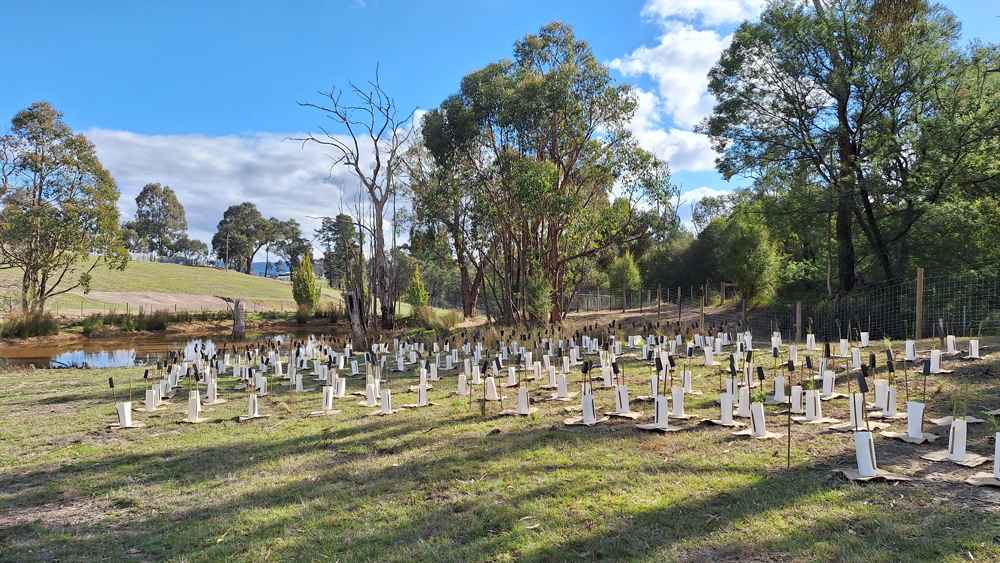
Above: Revegetation around a farm dam at Dixons Creek, in the Yarra Valley, which has been designed to create a healthy habitat for native birds and other creatures.
The monitoring program connects rural landholders with experienced and passionate birders to monitor bird populations on private land throughout Victoria.
Surveys are conducted four times a year using the “2 hectare, 20 minute” method, recording all birds seen or heard during that time. The results provide information on the health and distribution of woodland bird populations on private land and the success of habitat restoration projects.
The project was launched in 2017 with financial support from a private philanthropist who is passionate about birds and habitat restoration. It has grown to include more than 220 rural properties across Victoria and 648 monitoring sites.
Since then, volunteers have carried out more than 10,000 surveys, recording almost 80,000 individual birds across 207 species – including 35 of the 51 declining woodland bird species identified by BirdLife. These dedicated volunteers have contributed more than 3300 hours to monitoring efforts, providing vital data to help protect our woodland birds and their habitats.
Former ranger-in-charge of Hattah-Kulkyne National Park Phil Murdoch and his wife, Fiona, an ecologist, began rehabilitating their 490 hectare conservation property, Raakajlim, south of Mildura, in 2001.
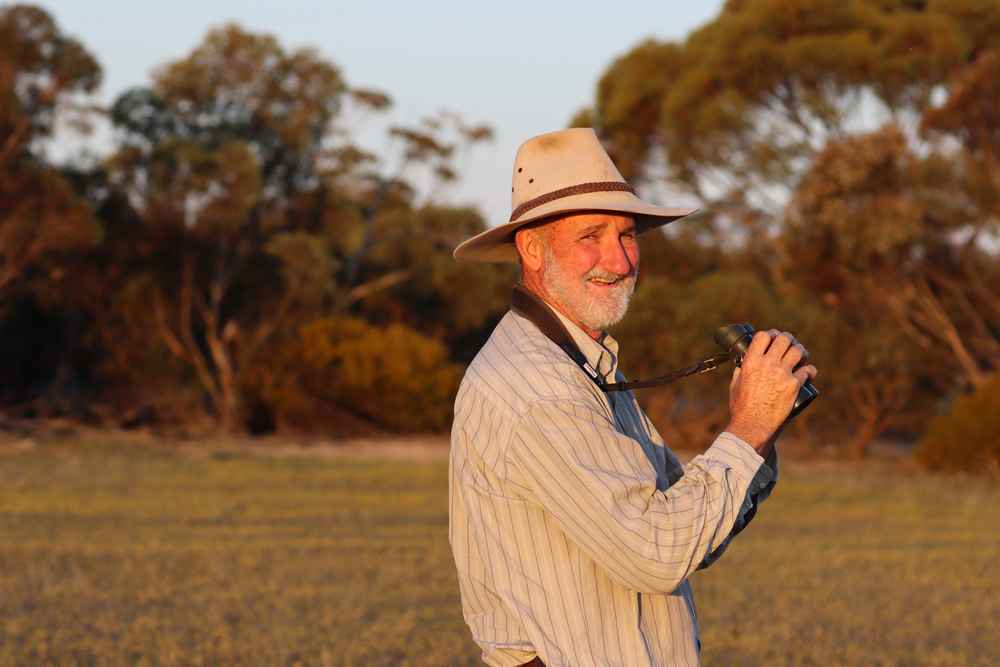
Above: Avid birder Phil Murdoch has been restoring land at Colignan, south of Mildura, since 2001.
After Phil retired five years ago, the Murdochs became involved with Birds on Farms, taking part in surveys and facilitating activities aimed at building awareness and appreciation of threatened plants and animals in the Mallee.
As well as planting trees and shrubs, they are restoring grassland and have begun creating a wetland 5 kilometres from the Murray River as a refuge for birds, butterflies and insects.
“One of our first goals was to have malleefowl come back onto the property,” Phil said.
“In the past year we’ve been regularly seeing tracks, so we’re pretty hopeful.”
You can read about Phil's work at www.malleeconservation.com.au.
In 2022, Birds on Farms expanded to include a habitat restoration project in the Yarra to Yea region. Many landholders are passionate about birds and nature and are looking for ways to increase native vegetation on their properties.
To help these landholders, we develop property-specific habitat restoration plans aimed at supporting healthy woodland habitat on productive agricultural properties. The plans include detailed project outlines, lists of required materials and project budgets. They are provided free of charge and can support funding applications for on-ground implementation.
Over the past 2 1/2 years, the team has worked with 23 landholders on habitat restoration plans that include actions such as protecting existing woodland, revegetation and dam restoration. Six plans have been partially implemented, resulting in the creation of 29.2 hectares of valuable woodland habitat.
To further help landholders in shaping healthy bird habitat on their properties, we have produced a new resource: the Bird-Friendly Farms guide. This guide, developed in collaboration with Northern Tablelands Local Land Services, draws on our experience with Birds on Farms.
Birds and their woodland habitats are not the only beneficiaries of Birds on Farms. Participants often say how personally rewarding it is to be part of the program.
Pomonal landholder John King said it encouraged people to “form a real, natural connection with the land of which you are the current custodian”.
Experienced birder and artist Jane Rusden, of Campbell’s Creek, said she also found the program gratifying.
“As a volunteer bird surveyor, I get to meet conservation-minded landowners (and) witness how they choose to provide valuable habitat for birds, which also benefits many other native species,” she said.
“In my experience, landowners want to know about the birds on their land, and some join me on the surveys, contributing their bird knowledge as well. It’s a situation where everyone wins – including the birds!”
To learn more, get involved, or download the Bird-Friendly Farms guide, go to www.birdlife.org.au/programs/birds-on-farms
This project is made possible through generous donations from a private philanthropist with a keen interest in woodland bird conservation, along with The Ross Trust and Equity Trustees.
Shannon Creaney is Monitoring Co-ordinator of Victorian Birds on Farms at BirdLife Australia.
For more information, email birdsonfarms@birdlife.org.au.