Victorian Landcare Magazine - Spring 2025, Issue 90
Whether it’s their unique features, interesting sounds or the astonishing transformation they make from tadpoles, frogs are a popular way for children of all ages to learn about biology and ecology.
So it was no surprise that six of the 103 Victorian Government Junior Landcare and Biodiversity Grants awarded to schools in 2024 were for supporting frog habitats.
A lack of suitable habitat is a real threat to frogs right across Australia.
Frogs are a valuable part of ecosystems, as both predator and prey species, and habitat restoration supports populations and helps connect frog communities across the landscape.
At least 38 species have been recorded in Victoria, with the Baw Baw frog (Philoria frosti) and spotted tree frog (Litoria spenceri) among the most critically endangered, and the growling grass frog (Litoria raniformis) and Bibron’s toadlet (Pseudophryne bibronii) on the list of threatened species.
What follows are brief outlines of the six frog-based projects that were funded by the 2024 Victorian Junior Landcare and Biodiversity Grants.
Students at Emmaus Catholic Primary School, at Sydenham, are building their very own ‘Frog Oasis’, containing both a frog pond and a frog hotel. As the students plan and construct the frog oasis, they’re also learning about the ecosystem they are creating. They are hands-on every step of the way, from weeding and clearing the current area to planning, building the pond and planting native flora.
Fairfield Primary School is transforming a bare and degraded section of the school yard into ‘A Fabulous Frog Bog’, a new frog habitat and outdoor learning space.
The Fairfield frog bog will provide a specialised habitat and refuge area to support several different frog species. Creating a wetland ecosystem also will foster varied microbial communities in the soil and water. The project starts with classroom research and planning, followed by outdoor frog habitat observation and monitoring to enhance biodiversity education and provide experiential learning opportunities.
Orchard Park Primary School, at Officer, is taking frog habitats to the next level, with a ‘Pollinators Paradise and Froggy Fairyland’. The school neighbourhood is newly developed, and students have discovered through observation and monitoring that it doesn’t have a strong community of pollinators.
An area of 45 square metres has been allocated for an indigenous garden to increase biodiversity on the school grounds. The student-led project is creating a habitat to provide food, shelter and breeding areas for native pollinators, plants and animals. This also includes vital water sources, irrigation and a pond to attract native frogs.
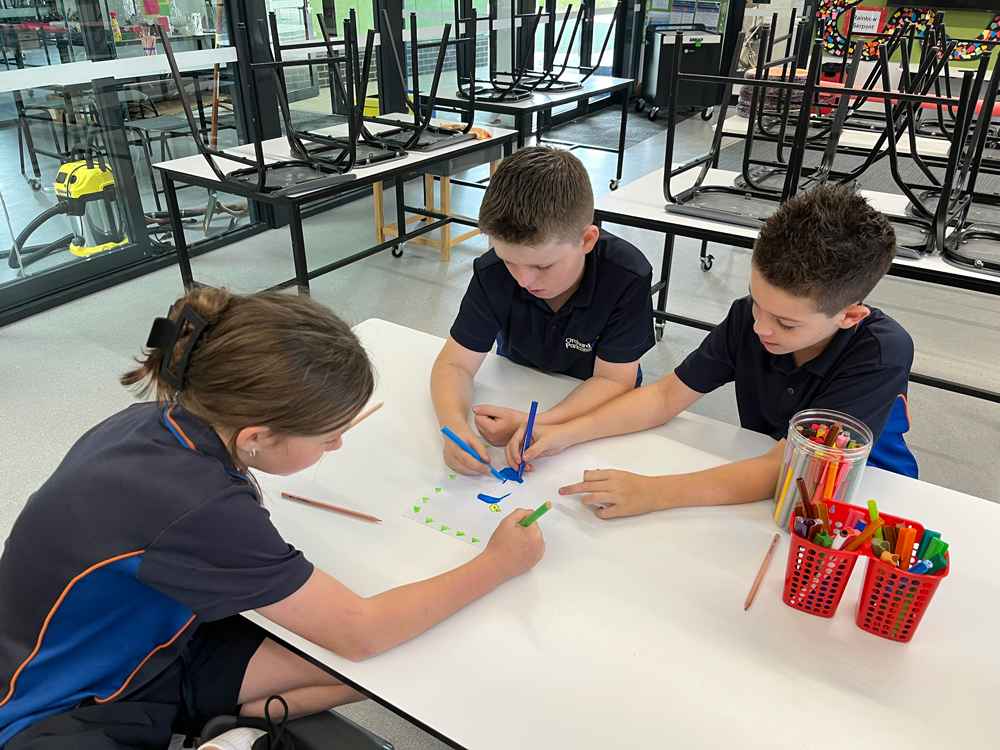
Above: Orchard Park Primary School students Adriana (from left), Blake and Lukas, plan the plantings for the pond.
Orchard Park Primary School STEM teacher Nicholas Pattison said students have been measuring how much sunlight, wind and rain the area receives to ensure the pond and frogs flourish.
“They worked with a local nursery to select the most appropriate plants to attract and create a habitat for the frogs,” he said.
Tarralla Kindergarten, at Ringwood East, is adding a ‘Frog Bog’ and habitat stepping stones into their outdoor learning space and playground, nestled among well-established native trees, not far from Gracedale Park and Tarralla Creek.
Hands-on activities are giving the three and four-year-olds lots of opportunities to learn about biodiversity and lifecycles. With help from their families, they are building the frog bog, planting the surrounding stepping stones, and transforming a planter box into a butterfly cafe.
Wooragee Primary School, northeast of Beechworth, is upgrading its ‘Frog Bog’ which was originally created back in 2012. By restoring this valuable ecological feature, the school plans to rejuvenate the existing site, revive the frog bog, and provide an educational and hands-on experience for the students.
Students at Wurruk Primary School, west of Sale, have built a ‘Wurruk Frog Bog’ in an unused 7 metre x 5 metre area of the school, incorporating native plants, and natural and recycled materials.
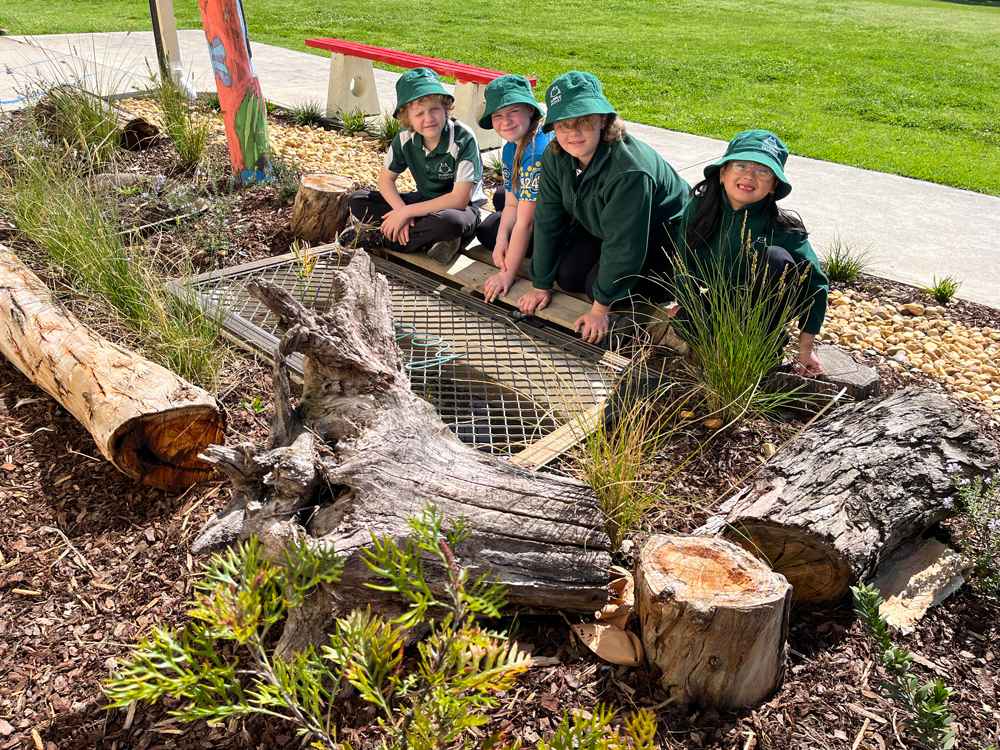
Above: Wurruk Primary School students Hamish Thomas (from left), Phayton Corbett, Sophie Tocknell and Zia Pagatpat check to see what’s in the Wurruk Frog Bog.
As an extension of STEM learning beyond the classroom, it allows students to safely make observations and appreciate those creatures who make the habitat their home.
And it’s no surprise the school opted for a project to benefit frogs – the school emblem is a stylised bright green frog!
Wurruk Primary School STEAM teacher Sarah Collins said the grant of $4475 allowed the whole school to go on an excursion to Healesville Sanctuary to learn about its breeding program for the tiny critically endangered southern corroboree frog.
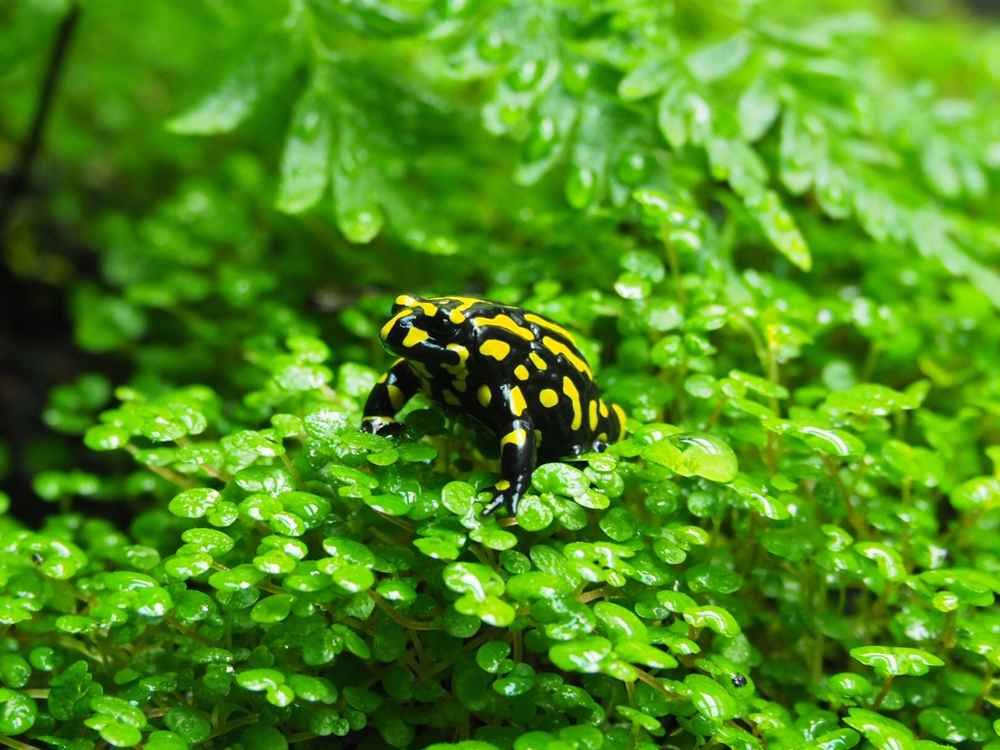
Above: A southern corroboree frog (Pseudophryne corroboree). Photo: Rachel Mort/iNaturalist
“All students participated in designing, preparing and planting a frog bog within our school which has increased biodiversity and encourage local species of frogs to thrive,” she said.
“Students were so excited to see new life in the bog, eagerly observing the changes as they progress through their lifecycle.”
The Victorian Government through the Department of Energy, Environment and Climate Action, funds the Victorian Junior Landcare and Biodiversity Grants, which are administered by Landcare Australia. Since 2018, $3.65 million of Victorian Government funding has been provided for these grants.
Eleanor Slade is Communications and PR Manager for Landcare Australia.
For more information email eleanor.slade@landcareaustralia.com.au.